Enchanting Queen: A Craft Fair Designer’s Real-World Review
First Impression: Elegant, Timeless, and Quietly Powerful
When I saw Enchanting Queen, my instinct was immediate: this isn’t a loud, trend-chasing design—it’s a soft-spoken statement. The title alone cues elegance, charm, and gentle authority. It leans into refined femininity without cliché, avoiding frills or cartoonishness. For craft fair buyers browsing handmade product tables, Enchanting Queen stands out not by shouting, but by holding space—like a well-chosen vintage brooch on a linen apron or delicate script on a baby’s muslin swaddle. It reads as premium, intentional, and quietly versatile—ideal for makers who value storytelling through stitch.
Where It Shines: Booth-Ready Product Pairings
In my weekend booth lineup—embroidered tote bags, tea towels, pillow covers, fabric pouches, and embroidered patches—Enchanting Queen performs strongest where elegance meets utility:
- Tote bag design: Centered on a natural canvas or oatmeal linen tote, it reads clearly from 6 feet away. Not too large, not too small—just enough presence to draw eyes without overwhelming the bag’s structure.
- Apron embroidery: Placed just above the pocket or subtly along the waistband, it adds heirloom appeal to kitchen-ready wearables. Buyers consistently pause longer at aprons with thoughtful, non-generic motifs like Enchanting Queen.
- Tea towel embroidery: Works beautifully on high-thread-count cotton or waffle weave—especially when stitched in tonal ivory-on-cream or charcoal-on-oat. The “elegance” promise delivers here: it feels handmade, not mass-produced.
- Embroidered patch: As a sew-on or iron-on patch, Enchanting Queen becomes a collectible. Crafters love adding it to denim jackets, baby carriers, or market bags—and its balanced proportions hold up even at 2.5" wide.
- Pillow cover & small pouch: These are where Enchanting Queen transforms from decoration to signature. On a linen pillow or drawstring pouch, it signals care, attention to detail, and brand cohesion—critical for boutique makers building recognition.
What Holds It Back (And How to Fix It)
Enchanting Queen is not universally forgiving—and that’s okay. As an embroidery designer, I treat every machine embroidery design like a living element of my product ecosystem. Here’s what demands attention before cutting fabric:
- Dense stitch areas: If the crown or floral elements pack tight satin stitches, they’ll pucker on lightweight knits (like baby onesies) or textured terry cloth. Always test on scrap fabric matching your final product’s weight and stretch.
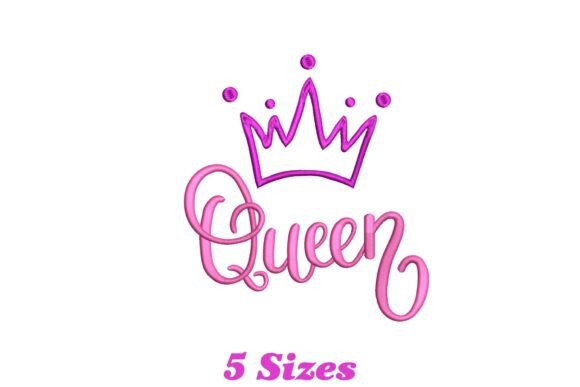
- Small lettering or fine details: The word “Queen” must be legible at 3" wide—or it risks blurring on dark fabric or thick towels. If your digital embroidery file includes tiny serif flourishes, confirm readability in person, not just on screen.
- Curved surfaces: Caps and curved market bags distort delicate outlines. Simplify or reposition Enchanting Queen for those items—or reserve it for flat, stable substrates like pillow covers and tea towels.
- Fabric texture vs. clarity: On heavily textured towels or bouclé pouches, reduce stitch density slightly or opt for matte thread colors to maintain definition. Glossy threads can disappear into shadows on nubby surfaces.
Selling Smarter: Online, In-Person, and Across Channels
For Etsy sellers and small shop owners, Enchanting Queen is a quiet conversion engine. Its mood translates powerfully in printable mockups—especially lifestyle shots showing it on a folded tea towel beside ceramic mugs or stitched onto a minimalist baby blanket (fitting its Babies category naturally, without infantilizing). Photographed with soft natural light and neutral backdrops, it conveys handmade quality and emotional resonance—not just decoration.
At craft fairs, it strengthens booth display strength by anchoring a cohesive color story: think ivory thread on oat linen, charcoal on heather grey, or blush on pale sage. Customers don’t just buy the item—they buy the feeling Enchanting Queen evokes: calm confidence, gentle celebration, quiet sophistication. That emotional hook boosts perceived value and supports higher price points for finished product.
Production Notes Every Embroidery Designer Should Run Through
Before stitching your first batch of Enchanting Queen products, run this checklist:
- Test the embroidery file on scrap fabric matching your target product—same weight, stretch, and finish.
- Check thread contrast: ivory on cream? Navy on charcoal? Avoid near-matching combos unless intentionally subtle.
- Review spacing between elements—crowded crowns or cramped lettering won’t scale down cleanly for patches or pouches.
- Confirm hoop size compatibility with your machine and product type (e.g., cap frames vs. standard hoops).
- Inspect stitch density—high-density fills need stronger cutaway stabilizer on knits or lightweight wovens.
- Use the right stabilizer: tear-away for stable wovens, cutaway for knits, and water-soluble top layer for dense lettering on towels.
- Create at least one real mockup—not digital only—to assess drape, balance, and tactile impact.
- Compare fabric colors in daylight and indoor lighting; some neutrals shift dramatically under booth lights.
- Verify commercial licensing terms before selling finished product—this is essential for Etsy sellers, wholesale partners, and any commercial embroidery business.
Final Thought: Why Enchanting Queen Belongs in Your Core Collection
Enchanting Queen isn’t flashy—but it’s memorable. It doesn’t chase algorithms or seasonal noise. Instead, it supports long-term brand consistency, appeals across age groups (from new parents seeking meaningful baby gifts to grandmothers gifting elegant home décor), and scales gracefully from $18 embroidered patch to $78 linen pillow cover. For craft fair sellers, it’s a reliable anchor piece. For digital embroidery file sellers, it’s a mood-driven design asset with clear commercial legs. And for anyone building a handmade product line rooted in quality and quiet intention—Enchanting Queen earns its crown.