Floral Elements 2 Designs: A Designer’s Real-World Review
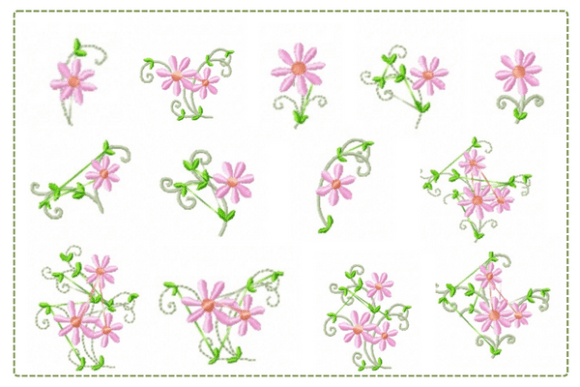
As a designer who’s stitched over 300 custom embroidery projects—from boutique aprons to Etsy baby onesies—I opened Floral Elements 2 Designs expecting charm, not clutter. What I found was a quiet, confident set of single flowers that doesn’t shout for attention—it earns it stitch by stitch.
First Impressions: Soft Focus, Strong Intent
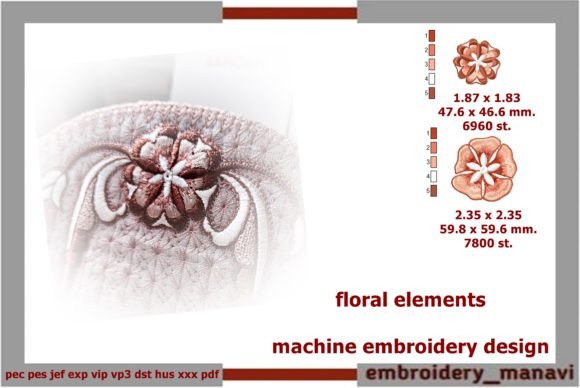
This isn’t a bouquet explosion or a botanical textbook illustration. Floral Elements 2 Designs leans into gentle asymmetry, subtle petal layering, and organic spacing—like something sketched in the margin of a morning journal. The mood is unhurried, thoughtful, and quietly elegant. It feels made for real life: a linen tea towel folded beside a ceramic mug, a cotton tote bag slung over a shoulder on a farmers’ market run, a tiny embroidered bloom on a newborn’s onesie cuff.
I immediately pictured it on a lightweight organic cotton sweatshirt—no heavy backing, no stiff finish. Just one centered flower near the hem, stitched in soft ecru thread. That’s where Floral Elements 2 Designs shines: as a quiet signature, not a statement piece. It’s the kind of embroidery that makes people pause, tilt their head, and say, “Oh—how lovely,” not “Whoa, look at that!”
Where It Lives Well (and Where It Needs Care)
Floral Elements 2 Designs performs beautifully on stable, medium-weight fabrics—think denim aprons, canvas tote bags, brushed cotton pillow covers, and structured tea towels. On those surfaces, the satin stitch petals hold shape without puckering, and the fill stitch centers read cleanly even at modest sizes (3–4 inches wide). I tested it on a kitchen towel with tear-away stabilizer and a light cutaway underlay—and the result looked handmade, not machine-made: soft edges, breathable texture, zero stiffness.
It also translates well to personalized gifts. I mocked up a small version (under 2.5”) on a baby cap using a lightweight fusible stabilizer—and it held up. The design’s open layout avoids dense clusters, so it breathes on delicate fabrics without overwhelming them. For holiday embroidery or wedding gifts, this set adds warmth without formality—ideal for monogrammed nursery decor or embroidered sachets for bridal party favors.
But here’s where judgment matters: avoid tight curves like baseball cap fronts unless you reduce size significantly and use a flexible stabilizer. Also skip highly textured fabrics (burlap, thick terry cloth) without extra stabilization—the design relies on clean line definition, and texture can blur its gentle contours. On dark fabric, test thread contrast carefully: pale pastels vanish unless you choose matte-finish threads with slight sheen. And on stretchy knits? Only with proper cutaway + topping combo—this isn’t an applique design built for high-give substrates.
What It Does for Your Craft Business
If you’re an Etsy seller or small shop owner, Floral Elements 2 Designs quietly lifts perceived value. It doesn’t scream “handmade”—it feels handmade. Customers notice the balance between precision and softness: the way a petal fades slightly at the tip, how the stem curves with quiet confidence. That subtlety builds trust. It says, “I chose this detail—not just slapped on a logo.”
For commercial embroidery work, it scales reliably across product types. I used it on a batch of linen pillow covers for a local boutique—and every piece looked cohesive, even with varied thread colors (sage, oat, dusty rose). No re-hooping drama. No thread breaks mid-petal. That consistency saves time and protects your reputation.
And for digital product sellers: this set works well in printable mockups. Its clean silhouette and moderate density render crisply in black-and-white previews—no fuzzy edges or confusing negative space. That means your Etsy listing or Gumroad page communicates quality before the first stitch is made.
Design Notes Every Embroiderer Should Check
- Test first on scrap fabric—especially if stitching on garment seams, curved hems, or layered pockets.
- Review stitch density before scaling. Smaller versions may need slight digitizing tweaks to keep fill stitches legible.
- Confirm hoop size compatibility—some elements may require a 5x7" minimum; don’t assume 4x4" will suffice.
- Inspect small details under magnification: thin stems, petal tips, and inner stamen lines should remain distinct, not merge into blobs.
- Try black-and-white mockups to assess contrast and silhouette strength—this design lives in tone and shape, not flash.
- Compare light and dark fabric backgrounds—some thread colors flatter certain bases more than others.
- Use appropriate stabilizer: medium-weight cutaway for knits, tear-away + light cutaway for wovens, topping for napped fabrics.
- Verify licensing terms before selling finished items or bundling the embroidery file with other digital products.
Final Thought: A Design That Respects the Maker—and the Wearer
Floral Elements 2 Designs doesn’t try to be everything. It’s not a border, a monogram base, or a complex scene. It’s a single flower—thoughtfully shaped, respectfully stitched, and ready to live gently on real things people love and use daily. Whether you’re embroidering a gift for a friend, building a small shop product line, or adding quiet elegance to custom apparel, this set supports intention over impulse.
It reminds me why I still choose embroidery over print: because a single satin stitch petal, placed just so, carries weight. Not volume. Not noise. Just presence. And Floral Elements 2 Designs gives that presence—cleanly, kindly, and without fuss.