Enchanting Fairy on Mushroom
A Whimsical Yet Wearable Statement for Boutique Apparel
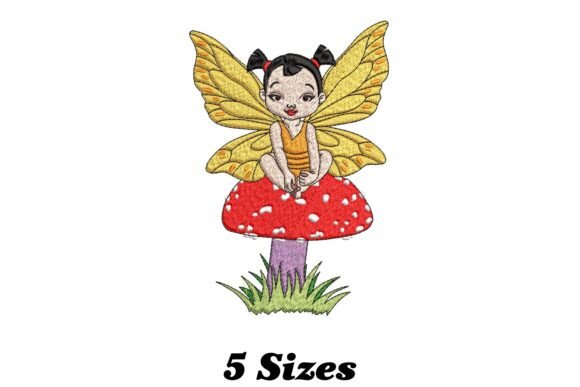
As an embroidery designer who’s developed over 200 commercial collections for small clothing brands and Etsy sellers, my first glance at Enchanting Fairy on Mushroom stopped me mid-scroll. It’s not just another fairy motif—it carries a quiet confidence: soft but not saccharine, detailed but not fussy, playful without leaning into cartoonish clutter. The fairy sits gently atop a plump, textured mushroom cap with subtle gills and delicate stem detail—no floating limbs or exaggerated wings. That grounded posture makes it feel *wearable*, especially on apparel where whimsy needs to hold its own against movement, laundering, and real-life wear.
How It Performs Across Sweatshirt & Hoodie Projects
Enchanting Fairy on Mushroom shines brightest on neutral sweatshirts—oatmeal, heather grey, and soft black—where its gentle curves and organic lines read clearly without competing with fabric texture. On pastel hoodies (think mint, lavender, or blush), the design breathes like a storybook illustration come to life. For dark garments, I recommend testing thread colors with high-contrast options—deep forest green for the mushroom, warm gold for the fairy’s hair, and creamy ivory for skin tones—to preserve legibility without harsh glare.
Placement matters: centered chest works beautifully on standard and oversized hoodies, while scaled-down versions hold charm on sleeves or back yokes. Avoid placing it directly over ribbed cuffs or hems unless you’ve tested stabilizer support—the stitch density in the mushroom cap and fairy’s skirt requires moderate stabilization to prevent puckering on stretchy fleece blends.
Beyond Hoodies: Tote Bags, Denim, and Seasonal Lifestyle Pieces
This Creative Fabrica embroidery file transitions smoothly to tote bags and denim jackets—especially when paired with tonal thread choices that echo natural fibers. On canvas totes, the fairy reads as artisanal rather than juvenile; on washed denim, it gains vintage charm. For cozy seasonal outfits—think cable-knit vests or flannel-lined hoodies—the design adds narrative warmth without overwhelming the garment’s tactile personality.
It also photographs exceptionally well in lifestyle product photos. The composition naturally draws the eye upward, making it ideal for printable mockups used in Etsy listings or Instagram carousels. Small shop owners will appreciate how consistently it reinforces brand identity: soft, intentional, quietly magical—not trendy-for-trend’s-sake, but timeless enough to reappear across seasons.
Where to Use It Carefully (and Why)
- Stretchy fabric: Always pair with cutaway or tear-away + topping stabilizer—especially on knits. The fairy’s flowing skirt and mushroom gills contain fine satin-stitched areas that can distort if unsupported.
- Curved surfaces: Avoid center-back placement on tightly curved hoodies unless you’re using a multi-hoop or repositioning technique—the design’s vertical balance shifts subtly on convex seams.
- Fleece and heavy napped fabrics: Trim nap before hooping, and consider slightly reducing top tension to prevent thread nesting in dense areas.
- Tiny lettering or add-ons: This is a standalone machine embroidery design—not built for combo text layouts. Don’t force names or dates into the same hoop unless you’ve manually adjusted spacing and stitch order.
Design Integrity Meets Commercial Practicality
What sets Enchanting Fairy on Mushroom apart from many Fairy Tales category files is its restraint. There’s no excessive fill stitching, no unnecessary metallic accents, and no visual noise that competes with garment drape. That restraint translates directly to value: customers perceive it as premium handmade product, not mass-produced clip art. For boutique brands building recognition, consistency matters—and this design delivers visual cohesion whether stitched on a $48 hoodie or a $28 linen tote.
It also builds buyer trust. When your Etsy listing shows crisp, even stitches on a textured sweatshirt—no skipped threads, no shadowing through fabric—that signals craftsmanship. That perception lifts perceived value, encourages repeat purchases, and supports higher price points without justification.
Essential Embroidery Designer Notes Before Production
- Test on scrap fabric that matches your final garment’s weight, stretch, and finish—not just cotton muslin.
- Confirm stabilizer choice: medium-weight cutaway works best for most sweatshirt embroidery, but lightweight tear-away may suffice on stable t-shirts.
- Review thread color contrast under both daylight and indoor lighting—some pastel threads disappear on light heathers.
- Verify hoop size before digitizing adjustments—know whether you’re working within a 4x4, 5x7, or larger frame.
- Inspect stitch density in the mushroom cap and fairy’s wings: overly dense fills can cause stiffness on lightweight knits.
- Test on similar garment fabric, not just swatches—hoodie cuffs behave differently than flat panels.
- Compare placement options digitally first: use your embroidery software to preview chest, sleeve, and back positions on actual garment templates.
- Check Creative Fabrica product details thoroughly—including licensing terms—before selling finished apparel. Not all digital embroidery files permit commercial embroidery resale without verification.
A Thoughtful Addition to Your Digital Embroidery File Library
Enchanting Fairy on Mushroom won’t replace bold logos or minimalist monograms—but it fills a vital niche for makers who want to infuse custom apparel with storytelling, tenderness, and quiet sophistication. It’s the kind of embroidery file that invites pause, sparks conversation, and lingers in memory long after the first wear. Whether you're launching a small shop product line, refreshing your Etsy seller portfolio, or designing limited-run seasonal merchandise, this machine embroidery design earns its place—not because it’s flashy, but because it’s thoughtfully made, visually cohesive, and genuinely versatile across fabric types and customer expectations.