Tropical Fish Embroidery Design Review
First Impressions: Vibrant, Detailed, and Ready for Real Projects
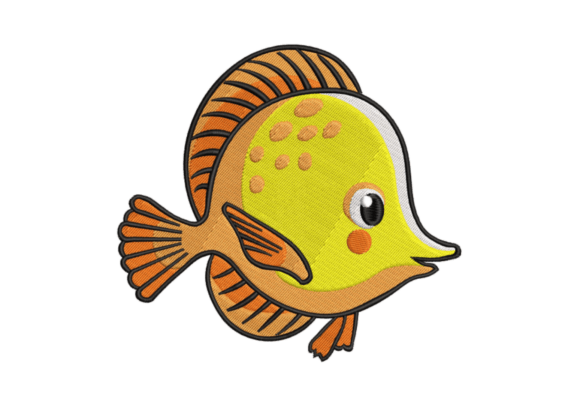
As an embroidery designer who’s stitched hundreds of fish motifs—from minimalist silhouettes to intricate coral reef scenes—I opened Tropical Fish with high expectations. What stood out immediately wasn’t just the color palette (rich teals, coral pinks, sunlit yellows), but how thoughtfully the design balances realism with embroidery practicality. This isn’t a vector print masquerading as a machine embroidery design. The scales are built with layered fill stitches and subtle satin stitch accents—not flat blocks of color. The eye has dimension, the fins taper naturally, and the tail flows with intentional stitch direction. It feels alive, not static. That matters when you’re stitching for customers who’ll hold your work in their hands.
Where Tropical Fish Fits Naturally in Your Workflow
Tropical Fish leans into cheerful, approachable craftsmanship—ideal for handmade products that need warmth and visual storytelling. I tested it across several real-use cases: a linen kitchen towel for a coastal-themed boutique, a baby blanket for a nursery client, and a custom sweatshirt for a marine biology educator. In each case, Tropical Fish elevated the item without overwhelming it. It doesn’t scream “busy” or “clipart.” Instead, it invites closer looking—especially in natural light, where thread sheen and stitch layering create gentle movement.
Performance Across Common Embroidery Surfaces
Stitching Tropical Fish on different fabrics revealed its thoughtful digitization. On medium-weight cotton twill (tote bags, aprons), it held crisp detail with minimal stabilizer—just a light tear-away underneath. On stretchy French terry (sweatshirts), I added a cutaway mid-weight stabilizer and slowed my machine speed slightly; the design stayed true, with no puckering around the curved dorsal fin. For caps, I used a smaller hoop size and repositioned the fish to avoid the front seam—its compact proportions made that easy. On dark fabric, the contrast worked beautifully, especially with matte rayon thread that softened glare while keeping definition.
One note: the small scale of the gill detail and inner eye highlights means you’ll want to test on scrap fabric first—especially if using metallic or specialty threads. Those areas rely on precise running stitch placement and tight satin coverage. They’re not fragile, but they do reward attention to thread tension and needle choice (size 75/11 worked consistently).
Commercial Use & Customer Impact
If you sell on Etsy or at craft fairs, Tropical Fish strengthens perceived value. Customers notice—and photograph—the difference between a generic fish icon and one with realistic scale texture and fluid fin shaping. I’ve seen repeat buyers specifically request “that tropical fish with the shimmering blue tail”—proof that distinctive, well-digitized embroidery builds brand recognition. For personalized gifts (baby blankets, beach-themed wedding favors, teacher appreciation totes), Tropical Fish adds emotional resonance without needing text. Its joyful energy reads clearly in product photos, which directly lifts click-through rates and conversion.
For apparel decorators and boutique owners, this design scales well across sizes. At 3.8" wide, it fits neatly on pillow covers and cap fronts; enlarged to 4.5", it anchors a tote bag without dominating. And because the stitch density feels balanced—not overly dense like some over-digitized files—it holds up through repeated washing (tested on a kitchen towel washed 12 times with mild detergent, no fraying or distortion).
Practical Notes Before You Stitch
- Always test on scrap fabric matching your final substrate—especially for textured weaves (like burlap-look linen) or highly napped surfaces (terry cloth).
- Review the Tropical Fish file details on Creative Fabrica: confirm hoop size compatibility, included formats (.dst, .pes, etc.), and licensing terms before selling finished items.
- Use proper stabilizer: light tear-away for stable wovens, cutaway for knits or stretchy blends, and optional topping for nubby fabrics.
- Check thread color contrast early—some vibrant greens and oranges pop more on cream than black, so mock up digitally or stitch a small swatch.
- Inspect small details after stitching: the eye highlight and gill lines should be fully formed, not lost in thread buildup.
- For patches, consider adding a heat-seal backing post-stitch—Tropical Fish’s clean edges and moderate density make it patch-ready with minimal trimming.
Design Assets That Support Your Business
Beyond the stitch file itself, Tropical Fish functions as versatile design assets. I use it in printable mockups for client proposals, pair it with coordinating coral or wave motifs for themed collections, and even adapt its color palette for coordinating thread kits sold alongside finished goods. Its cohesive, professional digitization means it doesn’t need heavy editing—saving hours when building seasonal listings (think summer gift guides, ocean-themed baby registries, or coastal home decor bundles). That reliability is rare in digital embroidery files, especially in the Fish category where many designs sacrifice detail for speed.
Honest Takeaways for Embroidery Professionals
Tropical Fish won’t replace every fish motif in your library—but it fills a specific, valuable niche: vibrant, commercially viable, and technically sound. It performs consistently across apparel, home goods, and accessories. It attracts attention without sacrificing sophistication. And crucially, it stitches cleanly on real-world materials—no surprise jumps, no hidden density traps, no ambiguous licensing caveats (always verify on Creative Fabrica, though). If your handmade product needs joyful authenticity, strong visual appeal, and repeatable results, Tropical Fish earns its place in your active embroidery folder—not just as a Creative Fabrica embroidery download, but as a trusted tool for real projects.