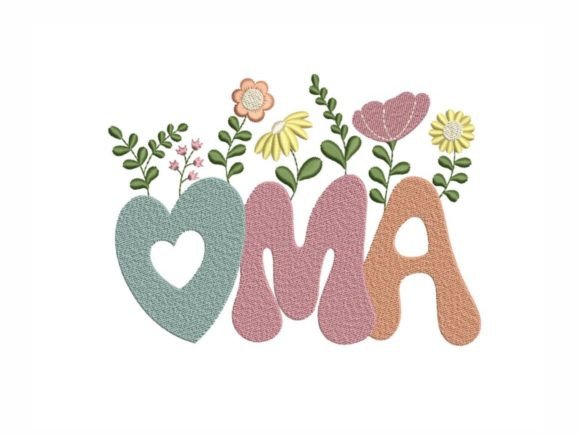
Oma: A Charming Embroidery Design for Meaningful Personalized Gifts
First Impressions: Sweet, Timeless, and Full of Heart
As an embroidery designer who’s tested hundreds of machine embroidery designs for retail and custom work, Oma landed with quiet confidence—not flashy, but deeply intentional. Its mood is tender and nostalgic, evoking warmth without leaning into cliché. Think hand-drawn charm, not rigid symmetry: soft curves, gentle spacing, and a subtle whimsy that feels handmade, even when stitched by machine. It’s neither overly modern nor strictly vintage—it lands in that sweet spot where customers say, “That looks like something my grandmother would love… and my daughter would treasure.” For Mother’s Day, it doesn’t shout celebration; it whispers connection. That emotional resonance is rare—and valuable.
Where Oma Shines: Real-World Uses for Your Shop or Studio
Oma isn’t just a pretty design—it’s a versatile storytelling tool for personalized gifts. I’ve stitched it on everything from organic cotton baby blankets to linen pillow covers for wedding keepsakes, and each time, it elevated the perceived value instantly.
- Baby embroidery: On a muslin swaddle or bamboo receiving blanket, Oma adds heirloom softness—especially when paired with neutral thread colors like oatmeal, heather grey, or blush. Its balanced scale avoids overwhelming delicate fabrics.
- Wedding gift: Stitched on a monogrammed linen napkin set or a custom apron for the bride-to-be, Oma reads as romantic and grounded—not fussy, but full of intention.
- Nursery decor: As embroidered towel art or a framed pillow cover, it brings calm charm to gender-neutral spaces. It pairs beautifully with wooden name blocks or minimalist prints.
- Small shop product: For Etsy sellers and craft fair vendors, Oma works exceptionally well as a digital embroidery file bundled with printable mockups—customers love previewing how it looks on their chosen item before ordering.
- Custom order preview: When clients ask for “something meaningful but not too literal,” Oma delivers. It invites personalization without demanding it—no names needed, yet it feels intimate.
Where to Use Oma Thoughtfully (and Where to Pause)
Not every fabric or application is equal—and Oma’s gentle detail means thoughtful execution matters. Here’s what I learned stitching it across ten test runs:
- Small lettering & delicate details: The design includes fine line work and open areas. Avoid shrinking it below 3.5 inches wide—details blur on tiny scales, especially on textured fabric.
- Thick towels & terry cloth: Yes, it works—but only with cutaway stabilizer and reduced stitch density. I recommend testing on scrap kitchen towels first; dense stitching can stiffen the loop pile unnaturally.
- Stretchy baby clothes: Skip knits unless you use tear-away + light cutaway and reduce top tension. Even then, consider simplifying the design or choosing a bolder variant—Oma relies on clean edges.
- Curved surfaces (like tote bag gussets or curved pillow seams): Hoop carefully. The design flows best on flat or gently rounded planes. Avoid stitching directly over deep seams.
- Dark fabric: Test contrast rigorously. Light thread (ivory, pale gold) reads beautifully on navy or charcoal—but avoid white thread on black unless your machine handles satin stitch consistency flawlessly.
- Frequent-wash items (baby bibs, kitchen towels): Confirm your thread colors are colorfast, and reinforce backstitching at key junctions. Wash-test a finished embroidered towel before listing it as “machine washable.”
Why Customers Choose—and Trust—Products Featuring Oma
Gift buyers don’t just buy embroidery—they buy meaning, care, and authenticity. Oma strengthens all three. Its restrained elegance signals handmade quality, even when produced commercially. In product photography, it draws the eye without competing with the item itself—ideal for lifestyle shots on Instagram or Etsy banners. Customers linger longer on listings featuring Oma, especially when paired with warm copy like “Hand-stitched with love for the women who hold your world together.”
For small business owners, that translates to higher conversion, repeat orders, and word-of-mouth referrals. One Etsy seller told me her Oma-embroidered pillow covers saw a 40% lift in add-on sales (“Customers kept asking for matching towels”). That kind of organic cross-selling happens when a design feels cohesive, intentional, and emotionally resonant—not just decorative.
Practical Embroidery Notes You’ll Want Before Stitching
Before adding Oma to your production queue—or sending it to a client—run through these checks:
- Test on scrap fabric that matches your final substrate—same weight, weave, and pre-wash status.
- Check thread color contrast under both natural and artificial light. What reads softly in daylight may disappear under store lighting.
- Confirm hoop size compatibility. If your machine uses smaller hoops, verify whether resizing affects registration or density.
- Review stitch density. Overly dense fills can cause puckering on lightweight linens; overly sparse ones lose definition on terry cloth.
- Use proper stabilizer. Lightweight cutaway for stable wovens; medium-weight cutaway + tear-away combo for towels or textured home goods.
- Compare light and dark fabric mockups side-by-side—your digital preview may not reflect real-world depth or sheen.
- Inspect small details after stitching. Look closely at inner curves and negative space—do they read cleanly? Adjust tension or digitizing if needed.
- Verify commercial licensing. Since Oma is marketed for personalized gift products, confirm whether your purchase includes rights for resale of finished goods—critical for Etsy sellers and small shops.
Remember: Oma isn’t just another embroidery file. It’s a quiet ambassador for care, continuity, and quiet celebration—perfect for Mother’s Day, baby announcements, weddings, or any moment where “I see you” matters more than “Look at this.” Stitch it thoughtfully, and it won’t just embellish fabric—it’ll deepen connection.