Mini Martini: A Smart Embroidery Choice for Small Business Branding
First Impression: Playful, Polished, and Perfectly On-Brand
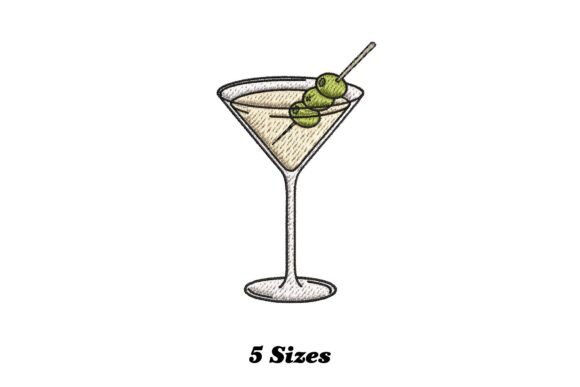
As an embroidery designer who’s digitized and stitched hundreds of small business projects—from café aprons to boutique tote bags—I opened Mini Martini expecting charm—and got far more. The name alone signals approachability with a wink of sophistication. “Mini” suggests scalability and versatility; “Martini” evokes refinement, celebration, and lifestyle alignment—ideal for wine-adjacent brands, creative studios, or any small business that values personality without pretension. It’s not fussy or overly ornate. It’s friendly but not childish, modern but not sterile, handmade in spirit yet professional in execution. That balance is rare—and invaluable when building brand identity through custom apparel.
Real-World Business Performance: Where Mini Martini Shines
Mini Martini excels where small businesses need flexibility most. As an embroidered patch, it holds crisp detail at 2–2.5 inches—perfect for sew-on labels on tote bags, sleeve accents on staff uniforms, or iron-on branding on reusable market bags. Its clean silhouette translates beautifully to cap embroidery: centered on the front panel, it reads instantly without overwhelming the curve. On aprons—especially for bakeries, florists, or craft studios—it adds a lighthearted signature that feels intentional, not incidental. For product packaging accents (think linen tags on handmade soap or ceramic mugs), Mini Martini serves as a subtle, memorable brand marker that elevates perceived value.
It also performs strongly in digital contexts: paired with a clean font in a printable mockup, Mini Martini helps Etsy sellers and handmade brands visualize cohesive merch lines before stitching a single thread. As part of a broader set of design assets, it complements monograms, botanical motifs, or minimalist typography—never competing, always enhancing visual consistency. And because it leans into the Wine category without literal grapes or corkscrews, it appeals beyond vineyards: pet brands use it for “happy hour” treats, florists for “bloom & cocktail” events, and creative studios for client thank-you gifts.
Smart Placement: Where to Use Mini Martini—and Where to Pause
Like any strong machine embroidery design, Mini Martini rewards thoughtful application. It works best on medium-weight cotton, twill, and canvas—fabrics common in work shirts, tote bags, and aprons. But caution is wise on highly textured fabric (like heavy terry cloth towels) or dark uniforms unless thread colors are carefully selected for contrast. Its playful shape demands breathing room: avoid cramming it into tiny corners or pairing it with dense text near the edge of a cap bill.
At under 1.75 inches, fine details may soften—so if you’re planning a 1.25-inch embroidered patch for keychain tags or mini product labels, test stitch first. Likewise, high stitch density areas (like tight martini glass stems or olive garnish outlines) can cause puckering on lightweight knits unless paired with appropriate stabilizer. Always run a black-and-white test stitch to assess clarity and spacing before committing to full-color production. And remember: curved surfaces—like the front of structured caps—require precise digitizing alignment; confirm the embroidery file handles gentle contouring smoothly.
Brand Identity Impact: More Than Just a Design
Small business merch isn’t just about visibility—it’s about resonance. Mini Martini strengthens brand identity by communicating tone instantly: confident but warm, curated but accessible. Customers recognize it quickly—not as generic clip art, but as a signature touch. That recognition builds trust, especially in local markets where handmade product authenticity matters. When stitched on staff aprons or reusable totes, it signals intentionality—telling customers, “We care about how our brand shows up, down to the last stitch.”
For Etsy sellers and crafters, Mini Martini adds perceived premium value to otherwise simple items: a plain linen napkin becomes “the martini napkin”; a basic canvas bag transforms into a branded experience. It invites engagement—people smile, ask questions, snap photos. That organic buyer engagement multiplies reach without ad spend. And because it’s rooted in the Embroidery category yet flexible across industries, it helps unify diverse product lines under one cohesive visual language.
Practical Designer Notes for Commercial Use
Before launching Mini Martini into your next commercial embroidery project, follow these field-tested steps:
- Test it in black and white first—to verify clarity, spacing, and stitch flow without color distraction.
- Check its performance at your target embroidered patch size—especially if producing sub-2-inch versions for caps or labels.
- Review thread color contrast against your base fabric; light threads on dark uniforms often need underlay reinforcement.
- Inspect spacing between elements—tight loops or thin stems should maintain integrity after washing and wear.
- Confirm hoop size compatibility with your embroidery machine and intended garment area (e.g., cap frames vs. flat hoops).
- Test on real fabric—not just stabilizer swatches—to assess how stitch density interacts with texture and drape.
- Use cutaway or tear-away stabilizer appropriately: cutaway for stretchy knits, tear-away for stable wovens like denim or canvas.
- Create a printable mockup for client approval—showing Mini Martini scaled and placed on actual product photos.
- Compare it beside your other design assets to ensure visual harmony—does it complement your logo? Does it stand out without clashing?
- Confirm commercial licensing before business use—this digital embroidery file must be cleared for resale, promotional, and branded applications.
Bottom line: Mini Martini isn’t just another machine embroidery design. It’s a strategic branding tool—compact, expressive, and engineered for real-world impact. Whether you’re stitching for a neighborhood café, launching an Etsy shop, or outfitting a creative team, it delivers professionalism with personality. Just remember: great embroidery starts with smart prep—not just beautiful files. Test, refine, and stitch with purpose.